


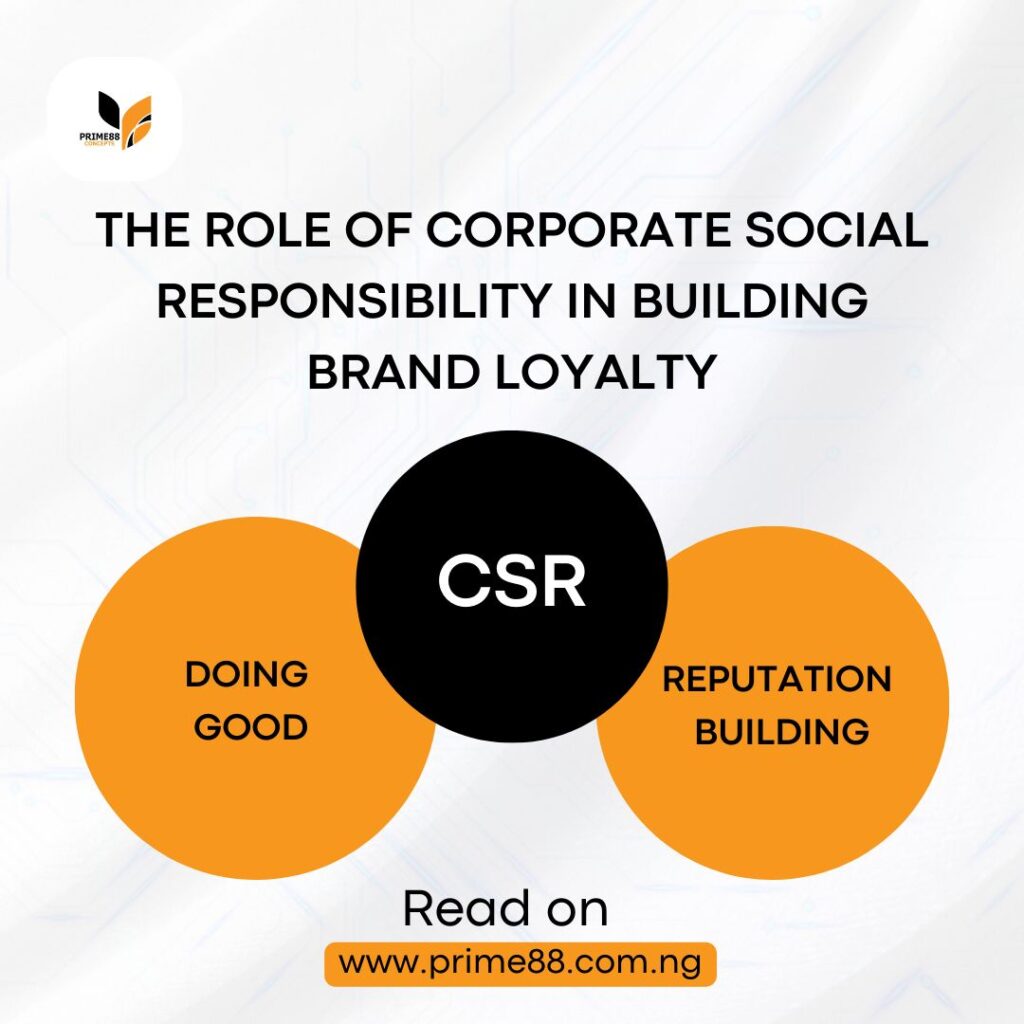
Corporate Social Responsibility (CSR) is now a strategic instrument that is essential to the day-to-day operations of businesses, rather than just being a philanthropic activity. Companies such as First Bank and MTN in Nigeria have shown how strong brand names and increased brand loyalty can be achieved through effective corporate social responsibility. Let’s examine the broader ramifications of CSR as a PR strategy and how these firms, along with prominent personalities, have used it to promote their brands.
The Impact of Corporate social responsibility on Brand Loyalty
CSR involves businesses taking responsibility for their impact on society, encompassing social, environmental, and economic dimensions. By addressing these areas, companies can foster trust, enhance their reputation, and build lasting relationships with their customers. When consumers perceive a company as socially responsible, they are more likely to support its products or services, leading to increased brand loyalty.
First Bank: A Legacy of Community Development
First Bank of Nigeria, a leading financial institution, integrates corporate social responsibility (CSR) into its business strategy. Through its “SPARK” initiative (Start Performing Acts of Random Kindness), the bank participates in community development, focusing on education, health, and economic empowerment. For instance, First Bank’s educational programs provide materials and scholarships to underprivileged students, benefiting recipients and enhancing the bank’s reputation. These efforts establish First Bank as a trustworthy and caring entity, encouraging customer loyalty.
MTN Nigeria: Empowering Communities through Technology
MTN Nigeria, a renowned telecom firm, has made significant progress in CSR. The MTN Foundation improves life in Nigerian communities through programs in education, health, and economic empowerment. One notable example is MTN’s “What Can We Do Together” initiative, collaborating with local communities on development projects. Their CSR efforts, from providing clean water to supporting healthcare facilities, show a commitment to societal well-being. This strategy has boosted the company’s brand image and increased customer loyalty, positioning MTN as a community development partner.
Influential Figures: Leading by Example
Prominent individuals also play a vital role in CSR, using their influence to drive positive change. Tony Elumelu, a renowned Nigerian entrepreneur and philanthropist, exemplifies this. Through the Tony Elumelu Foundation, he has empowered thousands of African entrepreneurs with training, mentorship, and funding. Elumelu’s commitment to entrepreneurship and economic development resonates with the public, enhancing his personal brand and the reputation of his associated businesses. By prioritizing CSR, influential figures like Elumelu inspire others to contribute to societal development, creating a ripple effect that benefits the broader community.
Another influential figure is Aliko Dangote, the richest man in Africa and the founder of the Dangote Group. Through the Dangote Foundation, he has undertaken various initiatives to improve health, education, and economic empowerment in Nigeria and beyond. Notable projects include building hospitals, funding education programs, and supporting small businesses. Dangote’s extensive CSR activities have not only helped uplift countless lives but also strengthened the Dangote brand as a symbol of prosperity and positive impact.
Corporate Social responsibility as a PR tactic
CSR is more than just doing good; it’s also a potent PR strategy. When implemented well, CSR projects may improve a company’s image, attract favorable media attention, and set it apart from rivals. Here are some examples of how CSR functions as a PR strategy:
· Building Trust: CSR activities demonstrate a company’s commitment to ethical practices and social responsibility, fostering trust among stakeholders.
· Enhancing Reputation: Positive CSR initiatives can enhance a company’s image, making it more attractive to customers, investors, and partners.
· Media Coverage: CSR activities often attract media attention, providing free publicity and showcasing the company’s positive impact on society.
· Customer Engagement: By involving customers in CSR activities, such as volunteer programs or charity events, companies can build a sense of community and loyalty.
· Crisis Management: A strong CSR track record can help mitigate the impact of negative publicity during a crisis, as stakeholders are more likely to view the company favorably.
In conclusion, by prioritizing societal well-being, companies not only contribute to the development of their communities but also secure long-term loyalty from their customers. As a PR tactic, CSR offers a multifaceted approach to building trust, enhancing reputation, and engaging with stakeholders, making it an indispensable component of modern business practice.
For further enquiries you can contact us on our socials @prime88.ng. Thanks for reading our article, let us know if this article has been helpful to you in the comment section.