
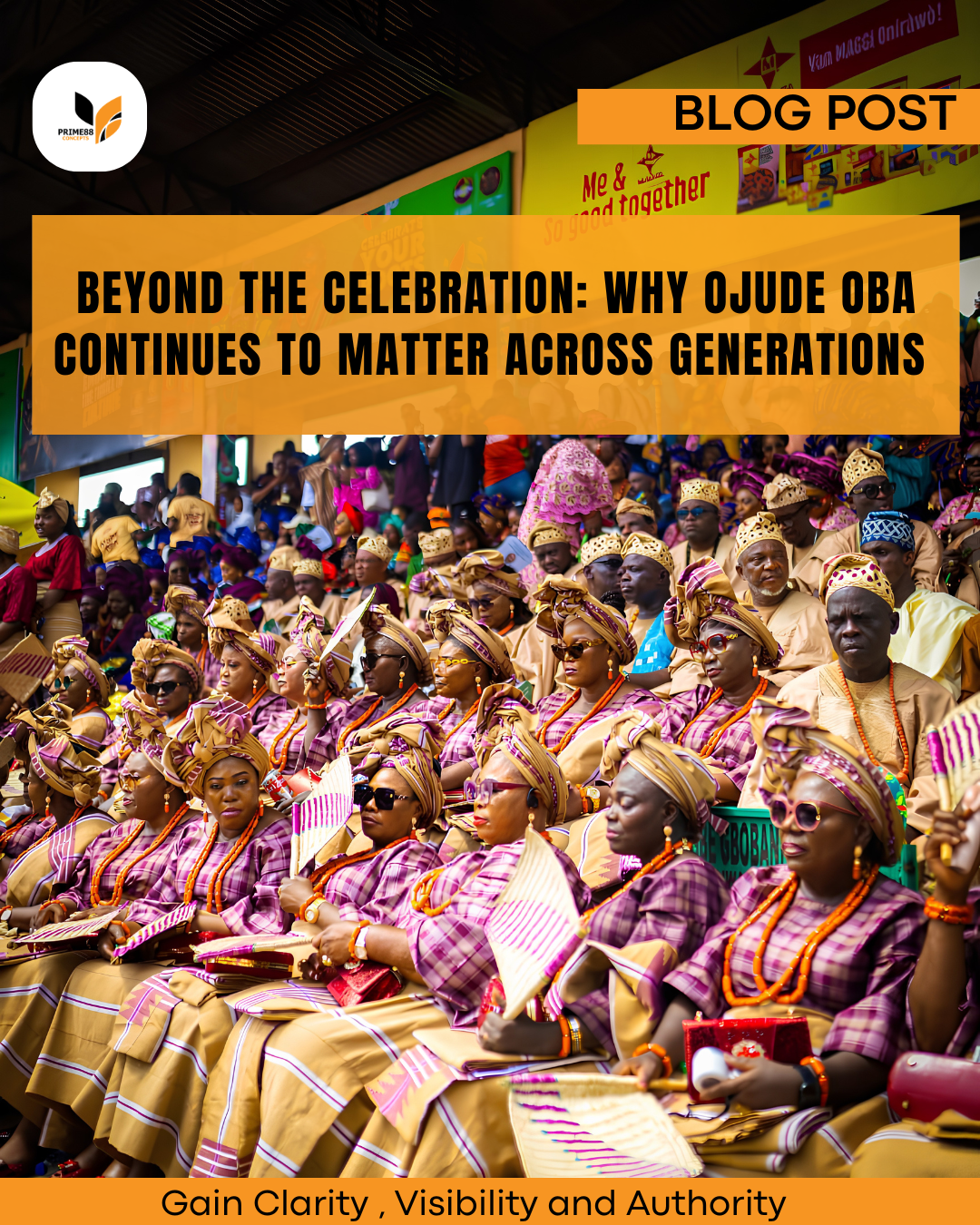

Every year, shortly after Eid-el-Kabir, the ancient town of Ijebu-Ode comes alive with colour, culture, and celebration. Roads fill with elegantly dressed men and women, age-grade groups make grand entrances, horse riders display tradition and prestige, and thousands gather to pay homage to the Awujale of Ijebuland. For many, Ojude Oba is a spectacular cultural event. For others, it is a highly anticipated social gathering. Yet beyond the vibrant fashion, photographs, and festivities lies a deeper story.
What is it about Ojude Oba that continues to captivate people across generations? Why has a tradition that began well over a century ago remained relevant in an era defined by rapid change, digital culture, and shifting social values?
The answer lies in the festival’s unique ability to preserve history, strengthen community ties, and reinforce a shared sense of identity.
The Origins of Ojude Oba
The history of Ojude Oba dates back to the late nineteenth century in Ijebuland, Ogun State, Nigeria. The festival began as a gathering of Muslim converts who came together to express gratitude to the Awujale for allowing them to practise their faith freely.
What started as a simple visit to pay respect to the traditional ruler gradually evolved into a larger cultural celebration that welcomed people from different backgrounds. Over time, Ojude Oba grew beyond its religious origins and became an important cultural institution deeply woven into the identity of the Ijebu people.
Today, it stands as one of Nigeria’s most recognised cultural festivals, attracting participants and spectators from across the country and beyond.
How a Cultural Gathering Became a Generational Tradition
One of the most remarkable aspects of Ojude Oba is its ability to connect generations.
Unlike many events that rely on constant reinvention to remain relevant, Ojude Oba has sustained its appeal through continuity. Families participate together, traditions are passed down from parents to children, and age-grade groups, known as regberegbe, continue to play a central role in the celebration.
For many attendees, participation is more than a yearly activity. It is a family tradition, a cultural responsibility, and a source of pride. Preparations often begin months in advance, with groups coordinating outfits, activities, and presentations that reflect both heritage and unity.
This transfer of culture from one generation to another has helped preserve the festival’s significance while ensuring that younger people remain connected to its values and traditions.
More Than a Festival: A Celebration of Identity and Belonging
In a world where globalization continues to shape how people live, work, and interact, cultural traditions often serve as important anchors of identity.
Ojude Oba provides a space where people can celebrate who they are, where they come from, and the values they share. It creates a sense of belonging that extends beyond geography, bringing together people from different professions, age groups, and even countries under a common cultural banner.
For members of the Ijebu community living outside Nigeria, the festival serves as a powerful reminder of their roots. It reinforces cultural connections that might otherwise weaken over time and provides an opportunity to reconnect with history, family, and community.
The continued growth of the festival demonstrates that people still value opportunities to gather around shared stories, traditions, and experiences.
Why Ojude Oba Still Resonates in a Changing World
The world today looks very different from the one in which Ojude Oba began. Technology has transformed communication, social media has changed how culture is shared, and younger generations often engage with traditions in new ways.
Yet rather than diminishing the relevance of Ojude Oba, these changes have amplified its reach.
Images and videos from the festival now travel across continents within minutes, introducing new audiences to its history and significance. The celebration has become a symbol of cultural pride, drawing attention not only for its visual appeal but also for what it represents.
Its enduring popularity suggests that while societies evolve, the desire for connection, identity, and shared experiences remains constant. People continue to seek spaces that remind them of who they are and where they belong, and Ojude Oba provides exactly that.
And according to our Founder/CEO, Folasade Abimbola, “Visibility can never replace community and connection. Even if the cameras are no longer on Ojude Oba, it will still be there and mean what it means to the community members. As a brand, build connections & communities.”
Community as the Real Continuity
Ojude Oba works because it is not just an event people attend, it is something people belong to. That sense of belonging is what keeps it alive year after year.
For many people, the connection is not built in the moment of the celebration. It has already been built long before the event happens. It lives in shared memory, shared pride, and shared identity. That is why it doesn’t need to be constantly “sold” to people. It already exists in their minds and in their lives.
This is an important lesson for brands, business owners, executives, and professionals.
A lot of people assume growth comes from being everywhere, posting more, or constantly trying to stay visible. But visibility alone is not what keeps people around. What keeps people is connection.
When people feel connected to something, they don’t need reminders to engage with it. They return to it naturally. They talk about it without being prompted. They associate themselves with it because it feels like part of them, not something separate from them.
On the other hand, when there is no real connection, even the most visible efforts fade quickly. People may see it, but they don’t feel attached to it. And what people don’t feel attached to, they don’t stay with.
This is where many brands miss it. The focus often goes to getting attention first, instead of building something people can actually relate to. But attention without connection is temporary. It can bring noise, but it rarely builds anything that lasts.
What lasts is involvement. When people feel like they are part of the process, part of the story, or part of the identity, they naturally protect it and carry it forward.
This is also the thinking we bring into our work at Prime88 Concepts. The focus is not just on helping people or brands become visible, but on helping them build something people can relate to and stay connected with. Something that doesn’t rely only on being seen, but on being understood and remembered in the right way.
Ojude Oba reflects this clearly. Its strength is not only in how it appears every year, but in how deeply people are connected to it. That connection is what keeps it going, not just as a celebration, but as something that continues to matter.